
POTS Line Replacement
The copper is going away.
Everything on it still has to work.
In 2019 the FCC’s POTS Lines Forbearance Order 19-72A1 ended the carriers’ obligation to maintain analog copper, and the big carriers have been retiring it and repricing it ever since. The lines themselves were never the point — what mattered was that they kept working when the power failed, and that 911 knew where the call came from. We replace the line and keep both of those properties: a gateway with a twenty-four hour battery, cellular failover, and our own SIP trunks underneath.

What It Replaces
Elevator and emergency phones
The wiring you already have — machine room, travel cable, cab — stays exactly where it is. The gateway takes over from the copper at the demarcation point, and the phone in the cab does not know the difference.
Fire and burglar alarm panels
The gateways carry alarm signalling properly, including Contact ID, so a panel keeps reporting to its central station. Your alarm company runs the signal test; we make sure the line underneath it behaves.
Fax machines and modem lines
T.38 and T.37 fax relay, plus V.150.1 for modem traffic. This is where a plain VoIP adapter usually falls over: fax and modems are unforgiving about timing and packet loss in a way voice is not. Credit card terminals, postage meters and older building controls all live on these lines too.
Gate, entry and callbox phones
Parking gates, loading docks, garage entries, pool and courtyard phones, and the callbox at the door nobody thinks about until it stops working. Anything on a two wire analog pair, in a place where somebody needs to be able to call for help or be let in.
Monitoring and telemetry
Tank level monitors, RTUs and SCADA endpoints that were built to dial out over a copper pair and have no other way to report. Replacing the terminal is usually out of the question; replacing the line under it is not.
The lines nobody can account for
Most sites have a few, still billed every month, with nobody left who remembers what they were for. We can help you work out what each one is actually doing before you pay to replace something that has been dead for years.
Two Gateways
Both ship configured for your site and both are managed by us.
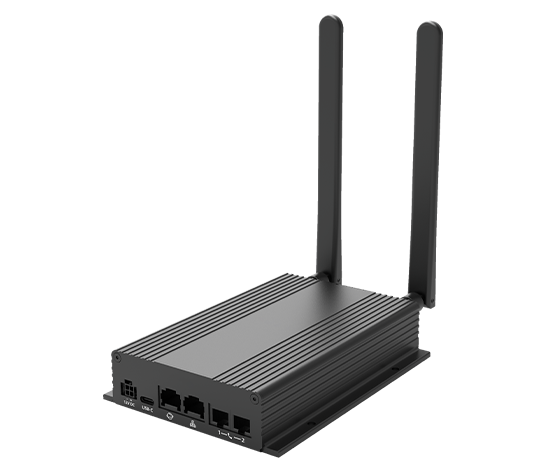
$399 up front
then $9 per activated port, per month
- Up to 2 analog lines
- Internal battery, 24 hour runtime
- Ethernet, with optional cellular failover
- PoE or DC power
- For a single elevator, a panel, or a couple of lines
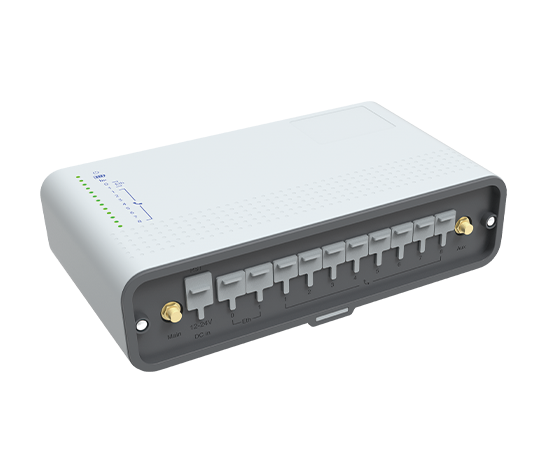
$599 up front
then $9 per activated port, per month
- Up to 8 analog lines
- Internal battery, 24 hour runtime
- Ethernet, with optional cellular failover
- PoE or DC power, IP65 rated against water and dust
- For a whole site, or anywhere exposed to the weather
Hardware is charged once, up front. The monthly figure is per port actually in service, so a two port gateway with one elevator phone on it is $9 a month, not $18.
Ethernet, Cellular or Both
A SIM is optional. It is what turns a wired line into one that survives the building network going down, and on sites with no usable network it becomes the connection itself. Where one is fitted, the SIM is an add-on charged on top of the monthly port charge, not instead of it. Both figures below come from our IoT SIM Cards plans.
No SIM
Ethernet only. Perfectly sensible where the building network is reliable and already on a UPS.
SIM as backup
A 1 GB IoT SIM that sits idle until the wired connection fails, then carries the line.
SIM as the primary
A 10 GB IoT SIM for sites with no usable network at all, or where you would rather not depend on one.
Your own SIM
If you already have a cellular account you would rather use, the gateway will take your SIM.
What You Pay For Calls
Usage runs at our ordinary SIP trunking rates. Nothing on this page is priced differently because it is an elevator.
- $1 per phone number, per month
- $1.50 per 911 registration, per address
- $0.009 per outbound minute, $0.006 per inbound minute
How It Arrives
Configured before it ships
We build it against your line list, so it turns up knowing its own numbers and already pointed at our trunks. There is nothing to set up when it comes out of the box.
Fitted by your own people
Power, network, and the existing analog pair onto the gateway. An electrician or your own facilities staff can do it, and we confirm the line is up from our side before they leave.
Watched by us afterwards
We monitor the gateways, their batteries and their line status, and we can push configuration and firmware remotely rather than sending somebody back out to the site.
POTS Line Replacement Questions
Do I have to replace the phone in the elevator?
No. The gateway presents the same analog line the phone already expects, at the same place the copper used to arrive. The cab wiring, the travel cable and the phone itself stay as they are.
What happens in a power cut?
The gateway runs on its internal battery, rated for twenty-four hours. If the site network is down as well and a SIM is fitted, the line stays up over cellular. That combination is the whole reason this hardware exists rather than a generic adapter.
Will it pass an inspection?
The parts an inspector cares about are that the phone works, that it reaches help, and that it keeps working without mains power. We can give you the line records and the 911 registration for each address. We are not the authority having jurisdiction, though, so if your inspector has a specific requirement, tell us before you order and we will tell you plainly whether we meet it.
Do I need a SIM?
No. Plenty of sites run on ethernet alone. A SIM is worth it where the network is unreliable, where the gateway sits somewhere with no drop, or where the line is important enough that you want a second path regardless.
How does it get installed?
It arrives configured for your site. In most cases an electrician or your own facilities staff can fit it: power, network, and the existing analog pair onto the gateway. We watch it register from our side, so the line can be confirmed working while whoever fitted it is still there.
What does it cost to run?
The monthly per port charge, any SIM you choose, and then ordinary usage at our SIP trunking rates — $1 per number per month, $1.50 per 911 registration, $0.009 a minute outbound and $0.006 inbound. An elevator phone that never gets used costs almost nothing to run.
How many lines can one site have?
As many as you need. Eight port gateways stack, so a tower with a dozen elevator phones and a fire panel is a normal job rather than a special case.
Send Us Your Line List
Tell us how many analog lines you have and what is on the end of them. We will tell you which gateway fits, what it costs to run, and what we need from you to get the numbers moved.